
Schools
Schools work hard to ensure that they are safe spaces for students to learn and grow. In order to prevent violence on campus, including shootings, many schools look at what options they have to help keep their communities safe. In this section, learn how to understand the signs for when a student may be in crisis and at risk of harming themselves or others and how ERPOs can be incorporated into safety planning when responding to students in crisis.
Schools are required by law to share safe and secure firearm storage information to families in their jurisdiction under the Safe Homes, Safe Schools Law. Learn about ways schools can teach their communities about secure storage in the home and how parents can have conversations about secure firearm storage both with their children and with other parents in their community.
What is an ERPO?

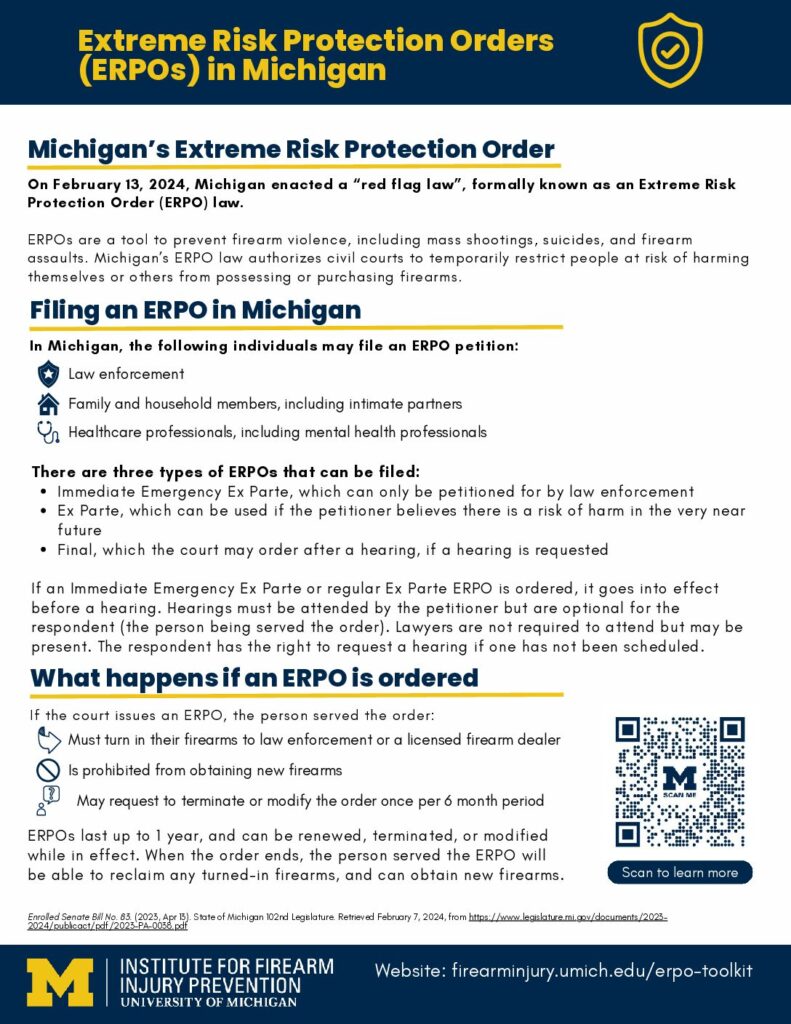
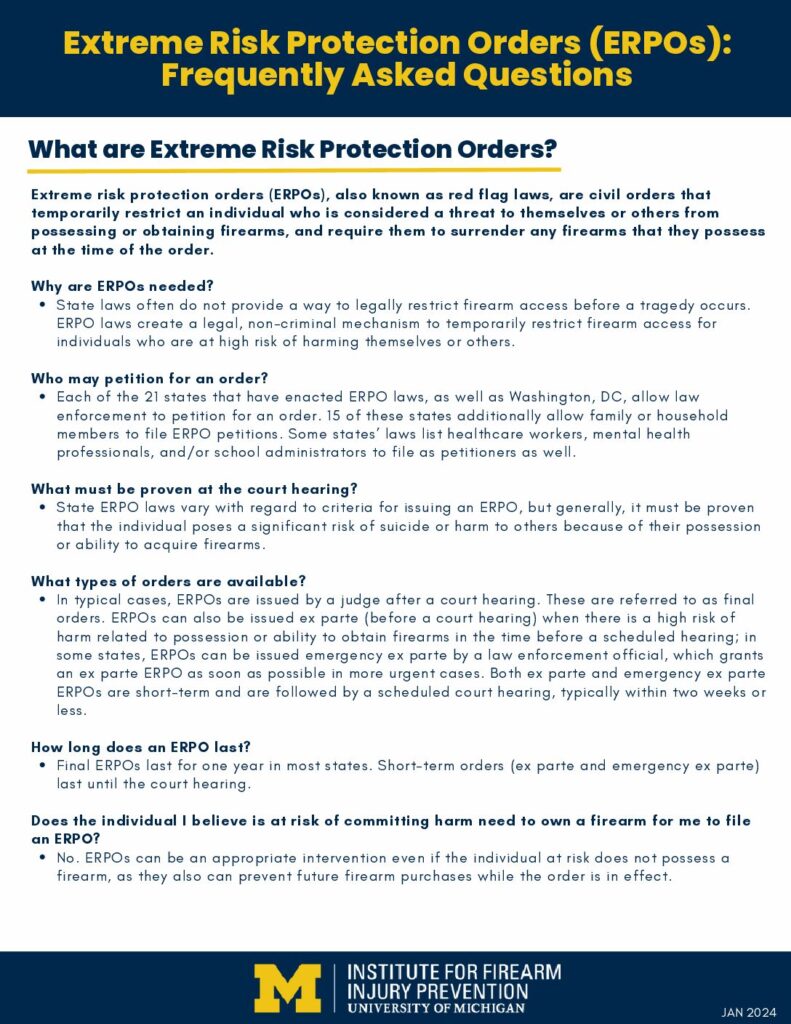
On February 13, 2024, Michigan enacted a “red flag law”, formally known as an Extreme Risk Protection Order (ERPO) law. ERPO laws authorize civil courts to temporarily restrict people at risk of harming themselves or others from possessing or purchasing firearms. In Michigan, law enforcement, families and household members, and healthcare providers can file an ERPO petition. In this section, learn more about Michigan’s ERPO law, who can file an ERPO petition, and what happens when an ERPO is filed in the Great Lakes State. If you are in immediate danger, call 911. If you are experiencing a crisis, call or text 988.
Learn More about Michigan’s Extreme Risk Protection Order
ERPO for Schools
Schools work hard to ensure that they are safe spaces for students to learn and grow. Teachers, administrators, school mental health professionals, and School Resource Officers (SROs) are uniquely poised to see when students and colleagues are in distress or even at-risk of committing violence to themselves or others.
In this section, learn how to understand the signs for when a student may be in crisis and at risk of harming themselves or others, how Behavioral Threat Assessment and Management (BTAM) and Mental Health Referral Pathway plans are excellent mechanisms for ERPOs in responding to students at high-risk for violence, and how to safely share information about students while respecting their HIPAA and FERPA privacy rights.
Why ERPOs?
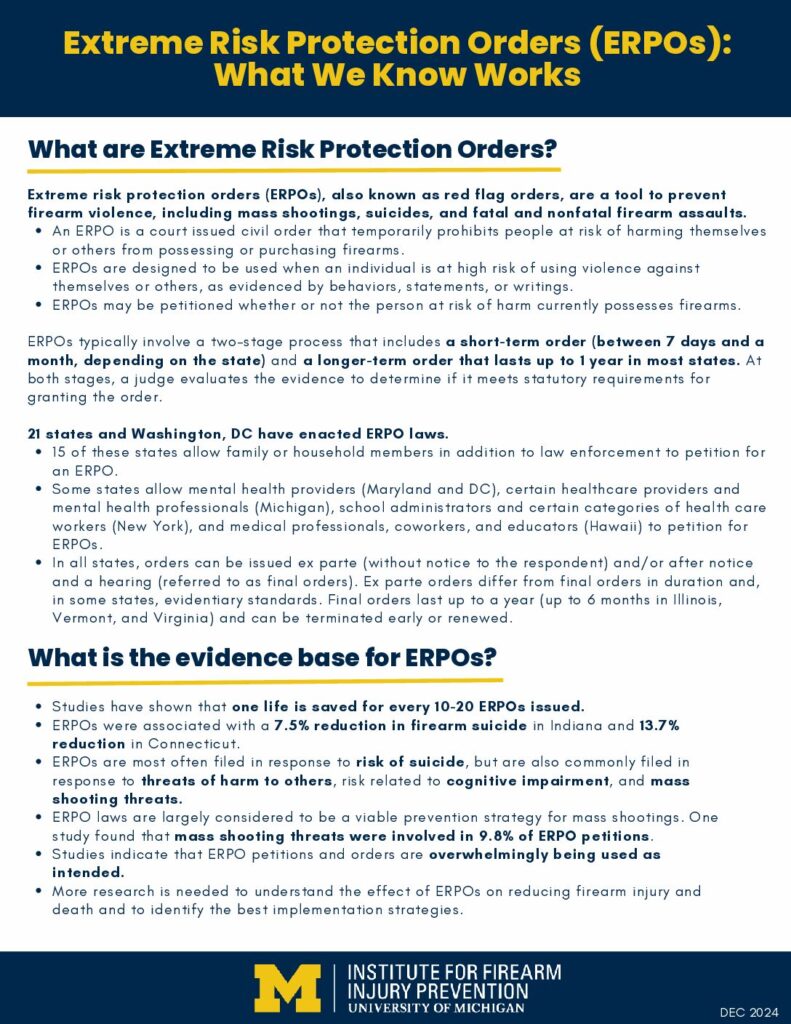
ERPOs are designed to prevent tragedies by temporarily restricting access to firearms to those who pose a risk of harming themselves or others. In a school context, ERPOs can be used to respond to school shooter threats or cases where someone has brought weapons into the school. Studies have shown that ERPOs have been used in response to school shooting threats. Additionally, ERPOs may be filed in response to students at risk of suicide. By restricting access to firearms, ERPOs buy time for students at high-risk for violence and their support networks to get the help and resources they need.
Who Can File?
In Michigan, educators and school administrators generally cannot file ERPOs. Still, there are ways in which schools can engage with ERPO laws and develop protocols for when and how to use ERPOs to promote school safety. Law enforcement officers, including school resource officers, are able to file an ERPO petition, as are licensed healthcare and mental health providers like school nurses or certain social workers. Michigan also empowers family members and legal guardians to file an ERPO petition.
ERPOs and Minors
ERPOs are designed to temporarily restrict access to firearms from individuals at risk of harming themselves or others, including minors. Minors served an ERPO may turn 18 years old during the duration of an ERPO. They might have firearms at home owned by family member, in which case the firearm owner would be required to store any firearms in a way where the minor could not access them. A minor may also possess a firearm illegally, in which case an ERPO may still be filed and the firearms removed from the minor’s possession.
ERPOs and Behavioral Threat Assessment and Management (BTAM)
What is Behavioral Threat Assessment and Management?
Behavioral Threat Assessment and Management (BTAM) is a form of violence risk assessment that examines potential threats of harm made by individuals to determine whether the threat is serious and to implement interventions to reduce the risk of the threat being carried out. In a school context, a multidisciplinary team works together to assess potentially threatening behavior and promote safety and prevent violence that may impact the school community. BTAM is not intended to be punitive, and focuses on connecting individuals at-risk of violence to help resources and services. This one-pager from the National Center for School Safety (NCSS) provides a top-level view of the threat assessment process. This School Threat Assessment Toolkit from the National Center for School Safety provides a highly detailed resource for assisting schools in implementing behavioral threat assessment and management as part of a comprehensive violence prevention strategy.
How ERPOs fit into BTAM protocols
Once threat assessment teams have identified and determined that there is a credible threat to school safety, they have a variety of interventions they can use depending on the nature and severity of the threat. ERPOs are a civil court-ordered removal of firearms, and should be considered a relevant intervention in cases where a student poses a credible threat to commit harm to either themselves or others in the near future. It is important to note that ERPOs only restrict access to firearms; other interventions to ensure school safety, especially if the threat is imminent or emergent, should be employed on a case-by-case basis. Resources and services that the individual at high-risk for violence may need should also be reviewed and provided appropriately.
ERPOs and Mental Health Referral Pathways
What are Mental Health Referral Pathways?
Mental Health Referral Pathways, as defined by the Substance Abuse and Mental Health Services Administration (SAMHSA) in their comprehensive Mental Health Referral Pathways Toolkit defines the process as “the series of actions or steps taken after identifying a youth with a potential mental health issue.” SAMHSA’s widely adopted model bases its Mental Health Referral Pathway process on a multitiered system of support “defined by (a) the precision and intensity of assessment involved in assigning students to intervention conditions, (b) the dosage of intervention provided to match the presenting mental health need, and (c) the number of students targeted by the intervention.” In practice, this model is structured into three tiers of interventions, with the first tier being generalizable, universally accessible social and emotional learning programs, and the third tier being individually-focused, intensive interventions for students with acute social, emotional, or behavioral health needs. In situations when school resources are unable to provide the student with the mental health needs they require, referrals to community mental health providers may be considered.
How ERPOs fit into Mental Health Referral Pathways
It is up to school mental health teams to identify students at high-risk for violence and work with them and their support networks for appropriate interventions. If a school mental health team has identified a student is at high-risk for violence and may have access to firearms currently or in the near future, the team may determine whether an ERPO is an appropriate intervention to limit the student’s access to lethal means. Other interventions, such as referring the student to community healthcare providers if the situation is emergent, should be utilized if necessary.

What is Secure Storage?
Secure firearm storage involves storing firearms unloaded, separate from ammunition and locked through various methods. It is an important practice that reduces the risk of firearm-related injuries. When both firearms and ammunition are stored securely, children have a 78% lower risk of self-inflicted firearm injuries and an 85% lower risk of unintentional firearm injuries. One study estimated that if half of households with unlocked guns switched to locking them, one third of youth gun suicides and unintentional deaths could be prevented. Secure firearm storage leads to reductions in intentional and unintentional firearm-related injuries and deaths among children and others, and lower rates of firearm theft.
Secure Storage for Schools
In 2025, Michigan passed legislation colloquially referred to as the “Safe Homes, Safe Schools” law. Safe Homes, Safe Schools requires school districts to provide their students’ parents with information about secure firearm storage. Secure firearm storage is a leading way to prevent access to firearms by children or teens who might use them to harm themselves or others. Schools are uniquely poised to speak to caregivers about this important and potentially life-saving measure to help keep children and their communities safe.
Resources for Schools:
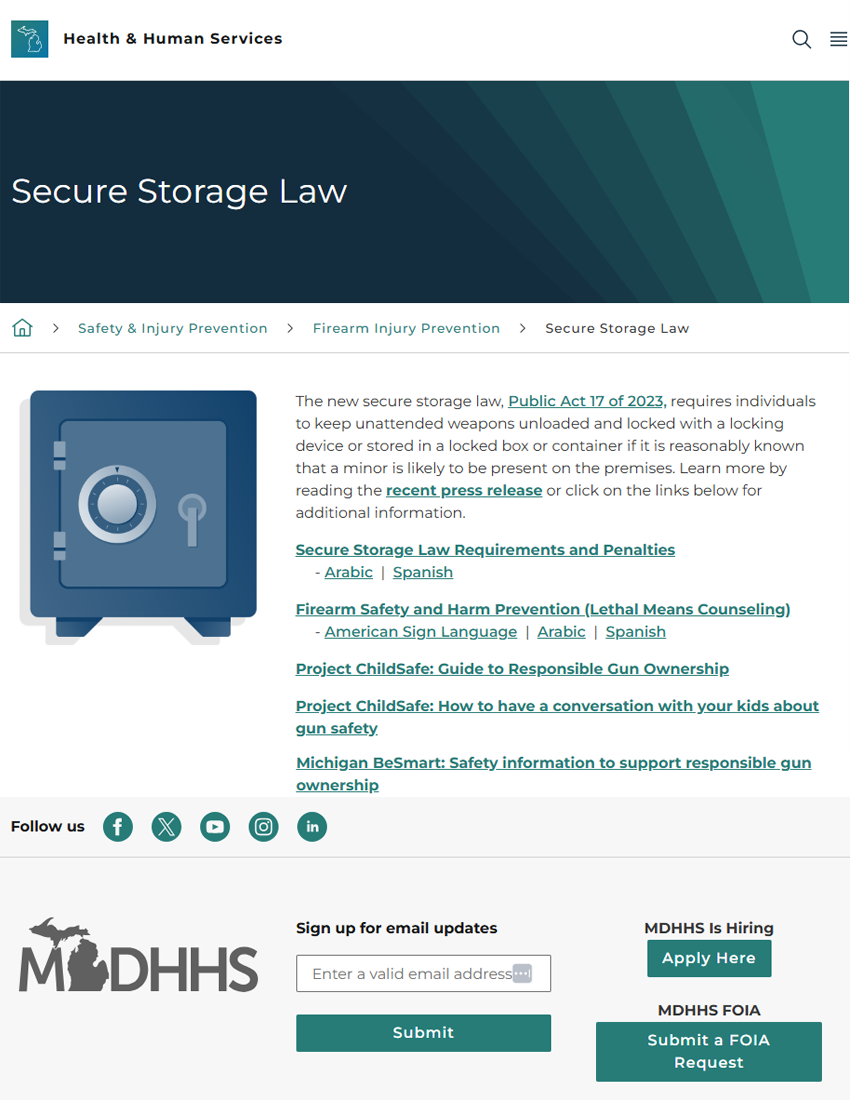
MDHHS Safe Storage Resources for Schools
MDHHS and MDE collaborated to provide schools with a comprehensive list of secure storage resources that schools can share with their communities ss part of their Safe Homes, Safe Schools programming.

Michigan Secure Firearm Storage Guide for Families & Caregivers of School-Aged Children
This practical, easy-to-use guide from the Michigan School Safety Initiative is designed to help families learn how they can prevent unauthorized access to firearms.
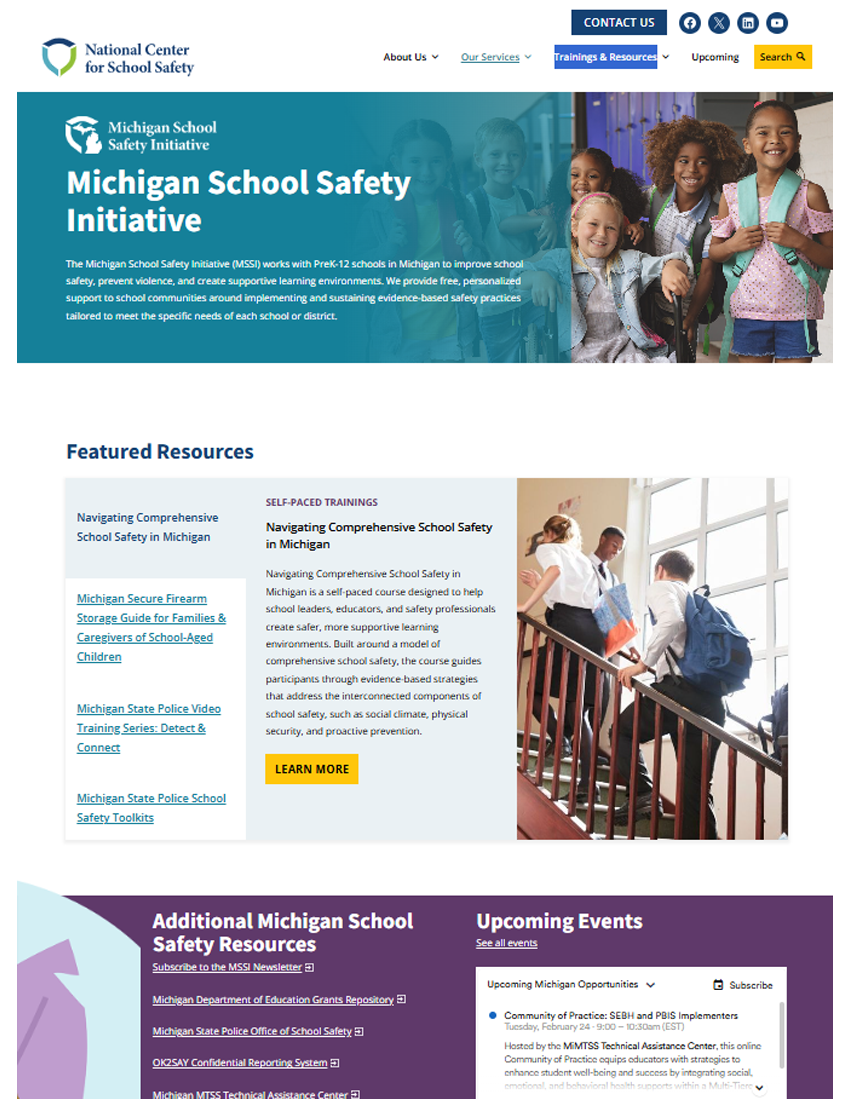
Michigan School Safety Initiative
The Michigan School Safety Initiative promotes school safety and violence prevention in schools across Michigan. The initiative offers one-on-one support and technical assistance, evidence-based safety approaches, and educational resources for schools.
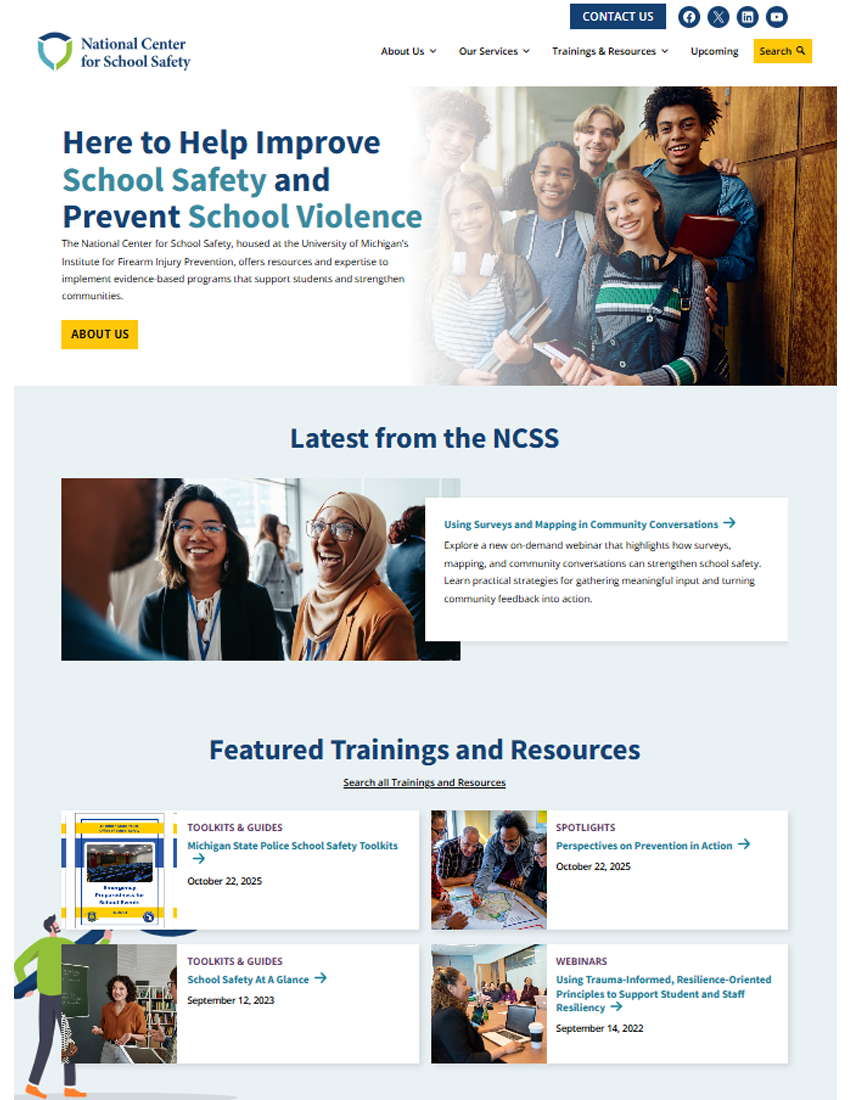
National Center for School Safety
The National Center for School Safety seeks to improve school safety and prevent school violence. The center offers informational resources, guides, and training that can be adapted by schools and communities to promote school safety.
Secure Storage Methods
A variety of devices can be used to store firearms securely, reducing unauthorized access. The most appropriate method varies based on the storage circumstances. In all cases, firearms should be unloaded and stored separately from ammunition. The information below provides descriptions, effects, and strengths of different secure storage methods.

Cable Lock
Cable Locks
Cable locks are widely available and can be used on most firearms. Cable locks can be inserted through the barrel, action, or magazine well of a firearm to prevent firing, requiring a key or combination to be removed. Allows for easy access and reduces the likelihood of theft, but can generally be dismantled relatively easily, reducing effectiveness with older children and adults.
Price Range: $10 – $50

Trigger Lock
Trigger Locks
Locks the trigger of a firearm. Ammunition needs to be removed. Allows for easy access and reduces the likelihood of theft, but can generally be dismantled relatively easily, reducing effectiveness with older children and adults.
Price Range: $10 – $75

Lock Box
Lock Boxes and Gun Cases
Lock boxes and gun cases are smaller and more portable than gun safes, yet still prevent access by children and unauthorized users by locking a firearm in a secure container. Lock boxes typically come with integrated locks which can be manual or biometric, but gun cases may need an external lock such as a padlock to ensure security.
Price Range: $25 – $300

Gun Safe
Gun Safes and Cabinets
Gun safes or cabinets allow for storage of multiple weapons, preventing access by unauthorized users, including children, and theft. Safes and cabinets are sturdy and offer some of the most secure storage options for firearms. Locks can be manual via key or combination or use biometric data. While not typically easily transportable, safes and cabinets come in a variety of shapes and sizes, and can be placed anywhere in the home that the firearm owner chooses. Specially made safes are also available for vehicle storage.
Price Range: $100 – $2000+

Out-of-Home Storage
Out-of-Home Storage
Out-of-home storage can be the most effective and appropriate method of secure storage in certain cases. Firearm storage may be available at business storage lockers, self-storage rental units, existing armories, and pawn shops. Specific requirements, processes, and prices of storage in these locations can vary by state and individual location.
Disassembling firearms is the most secure way to reduce the risk of firearm injury.
Firearm disassembly can be paired with all of the above secure storage methods. Disassembling the firearm into component parts, along with the removal of key elements, will prevent quick unauthorized use. Solely disassembling a firearm is not an exemption to the secure storage law.
Conversation Starters about Firearm Safety
It is important that families and caregivers have conversations with other households about firearm ownership and storage practices before a child enters the home. The resources listed can be shared with caregivers and offer guidance on initiating and maintaining those conversations.
Resources
Why and How You Should Ask Other Parents if They Own Guns
This article from John Hopkins School of Public Health offers guidance on starting conversations with other caregivers about the presence and storage of firearms in the home. The article provides tips on making these conversations more comfortable and approachable while still ensuring the safety and comfort of children when they enter another home.
This guide explains the importance of asking family, friends, and other community members about their firearm storage. Caregivers and other community members can also find tips on how to ask the questions that help keep kids safe.
Talking to Your Children About Guns
This resource from the Be SMART Program offers suggestions on how to talk to young children and adolescents about firearm safety, explains the risk of unintentional firearm injury in children, and stresses the importance of secure firearm storage.